Category: Video Games

  • AI Can Be Useful

    AI Can Be Useful

    Artificial intelligence is a much hated technology and for good reason. Like all the advances before it, it’s being leveraged by big tech as the be-all, end-all solution for all the world’s problems. It can lower costs, drive revenue, prevent fraud, and do it all cheaply. 

    Or so we’re led to believe.

    To be honest, though, AI isn’t bad. It’s the people who use it poorly and worsen our lives with it, they are the problem.Fortunately, we too can use it, and we can use it wisely.

    There are hundreds of uses for AI, but here are a few I find it particularly good at.

    Building Software

    Proficient coders will tell you AI is a superpower, but only if you know what you’re doing. I agree that’s the case when creating production software, but I create software for myself. 

    In my case, I vibe-code the entire project, and I never look at the source code. I ask Cursor Agents, my IDE of choice, to write the code and tests, investigate issues, etc., and I serve as the business analyst and software tester. 

    It does the rest.

    I also create and configure the GitHub repo, but Cursor Agents handles creating branches, committing the code, and pushing it. 

    And it does an excellent job. None of my projects are huge, and all the coding is done with either the Auto model or using Grok 4.5 High, but it very inexpensively serves the role as code creator and maintainer. 

    Recommending

    I recently chatted with Gemini about books. I told it the kinds of books I like to read, giving it several examples of ones I have enjoyed, as well as some basic information about what I like and dislike. I then uploaded a list of all the Kindle books I hope to one day buy, and asked Gemini to review the list.

    It pointed out how many of them didn’t meet the criteria I had outlined, because they were too technical, or written poorly, or there was some other issue with them. And it recommended several other books. I let it know which I’d already read and liked, added a few it suggested to my list, and now I have a pinned conversation in Gemini I can use anytime I need a book recommendation.

    This is an activity that AI is custom-made for. You could, for example, give it a list of TV shows or movies or video games that you like, and several you don’t, and ask for suggestions. And if you’re already familiar with ones it suggests, go back and forth with it until it understands your preferences and suddenly you have a valuable recommendation machine.

    Sorting Thoughts

    There are days when I feel upset, or have questions on my mind, or maybe I’m just wondering how something in the world works. In these cases I often turn to AI. I tell it what I’m thinking, what my problem is, or what my question is. We chat, exchanging comments, suggestions, and questions until I’m satisfied.

    This is another one of those situations AI is good at. No, it can’t solve all my problems, but it’s excellent as a sounding board, and it has a vast array of knowledge. I do this often, most of the time using the interactive feature in Gemini, where it’s always on, listening for my input, then it responds.

    We chat until I’m satisfied.

    Teaching Me

    I always have lots of questions. 

    I’m constantly wondering about technology, products, gardening, and more. I often turn to AI in these situations, providing it with pictures or other information. It almost always provides solid answers that help me understand the world we live in.

    I’ve gone from knowing almost nothing about how to set up a repo in GitHub properly to actually understanding the difference between CodeQL and Dependabots. I now understand better how to care for the plants in my yard. I have a better understanding about how smart phones, versus bridge cameras or full-frame cameras, work.

    AI encompasses the world’s knowledge, and if you are careful enough, and aren’t too naive, it can help you understand it.

    Reminding Me

    I couldn’t survive without the reminders I keep on my Android phone, or the calendar events I have for appointments. They keep me from forgetting all of the various things I need to do.

    But sometimes I just need a quick way to remember something. With Gemini, I can tell it things, and later, ask it to remind me about a fact I committed to it. I can do the same with notes in Google Keep, or in Google Drive, and Gemini can find those too. 

    It’s a persistent memory store that I can turn to at any point on my phone or computer and retrieve information I would otherwise lose to my aging mind.

    Assisting with Video Games

    Video games are an important aspect of my life, and have been for over 40 years. But my middle-aged brain, eyes, and hands don’t work like they used to. 

    Enter AI.

    Not only can I ask for game recommendations, but it also helps with understanding how accessible and/or difficult a game is, how long a game is, where I’m currently at in the game, and occasionally, it helps me get through a game. 

    In those cases though, my personal opinion is, if I need a walkthrough to complete a game, it’s not worth playing.

    Since chatbots like Gemini have access to all of the FAQs, reviews, opinion pieces, walkthroughs, and other information on video games, it’s the perfect place to answer all my questions.

    And So Much More

    This of course isn’t all AI can do. 

    I use it constantly, and while there are times it’s frustrating, where maybe I say, “Hey, Google,” to my smart watch or smartphone and it doesn’t respond, or I ask it a question and it returns something that doesn’t resemble an accurate response.

    But when it works, it’s like magic. It provides access to so much information, and does it so well so much of the time, it has become indispensable.

  • Getting The Sims 3 to Work on a Modern Gaming PC

    Getting The Sims 3 to Work on a Modern Gaming PC

    EA’s The Sims 3 dates back to 2009. At that time, a typical gaming PC had an Intel Core 2 Duo or Core 2 Quad CPU, or an AMD Phenom II X4. The GeForce GTX 260 and GTX 275 were hot GPUs, as well as the AMD Radeon HD 4850 and HD 4870. Most computers had 2 to 4GB RAM, and video cards had 512MG to 1GB RAM. Mechanical hard drives were all the rage.

    Today, those specs have been completely oblierated by even the cheapest modern gaming PC. And while EA has given The Sims 3 a few updates over the years, the game still can’t handle the CPUs, GPUs, or the available memory of current PCs. Gamers have had to rely on community modders and hackers to trick the game into believing it’s running on old PC hardware.

    Recently I spent a day and a half scouring the Internet with the help of Gemini, trying to get The Sims 3 working on my daughter’s PC, to no avail. I tried all the mods, all the hacks, but nothing worked. Later, she had some success by going through a ritual of uninstalling and reinstalling the game, and rebooting her PC. Sometimes she would have to do this for hours until she got it working.

    Enter Cursor.

    I gave it all the info I could find about how to get the game working, plus it performed online searches, and it created a patcher utility that it claimed would allow the game to run. But every time my daughter would patch the game, it wouldn’t work. In the end, I installed Cursor, Git, and GitHub CLI on my daughter’s PC, cloned the code, and worked with Cursor to investigate the issue.

    Cursor scoured the game’s installation folder, examined her saved games, and made fixes. I would test those fixes, provide feedback, and it made more changes. Finally, after a couple of hours of me inputting requirements then testing, the game started running reliably. Further testing, where I shut her PC down, powered it on again, and launched the game, proved it worked. Then I completely uninstalled and reinstalled The Sims 3, patched it, and tried the game.

    It worked.

    Now she can consistently run the game every day, and it works.

    If you’d like to try the patcher, you can install it from my GitHub repository.

    The Sims 3 Patcher Tool

    Please let me or the various Sims communities know if it helps you run the game reliably.

  • Video Game Violence Isn’t Violence

    Video Game Violence Isn’t Violence

    Just as I know that holding a conversation with AI isn’t the same as holding one with another human being, I know that killing virtual beings in a virtual universe isn’t the same as killing in the real world.

    When I started playing computer games in the early 1980s, graphics were primitive. Firing missiles and dropping bombs in the original F-15 Strike Eagle on the Commodore 64 required the suspension of disbelief because everything in the game, including the plane and the world, weren’t realistic looking.

    F-15 Strike Eagle

    It wasn’t long before programmers learned how to make computers like the C64 depict more realistic images. Then came along better hardware, such as the Atari ST and the Amiga. Now killing began to look like killing. Then PCs upped the ante by increasing the number of on-screen colors all the way up to 256, then to millions. This, along with the addition of more pixels and more powerful graphics cards, gave developers unbelievable power.

    By the early 1990s we had cringe-worthy video game violence. Games like Castle Wolfenstein, Mortal Combat, Doom, and more, showed gore that disgusted right-wing Christians and had moms asking for such games to be banned.

    Mortal Kombat

    Today there’s no question of whether violence is depicted with sufficient detail in modern video games. The hardware and software are more than capable, and it no longer requires you to imagine it. You only have to open your eyes to see.

    I’ll admit, I play a lot of violent games. And I’m not a big fan of little indie titles where farming, dating, or running a bookstore is the main focus. I prefer big, Triple-A RPGs, shooters, and similar where making progress involves killing bad guys.

    Castle Wolfenstein

    Sometimes they aren’t even bad guys.

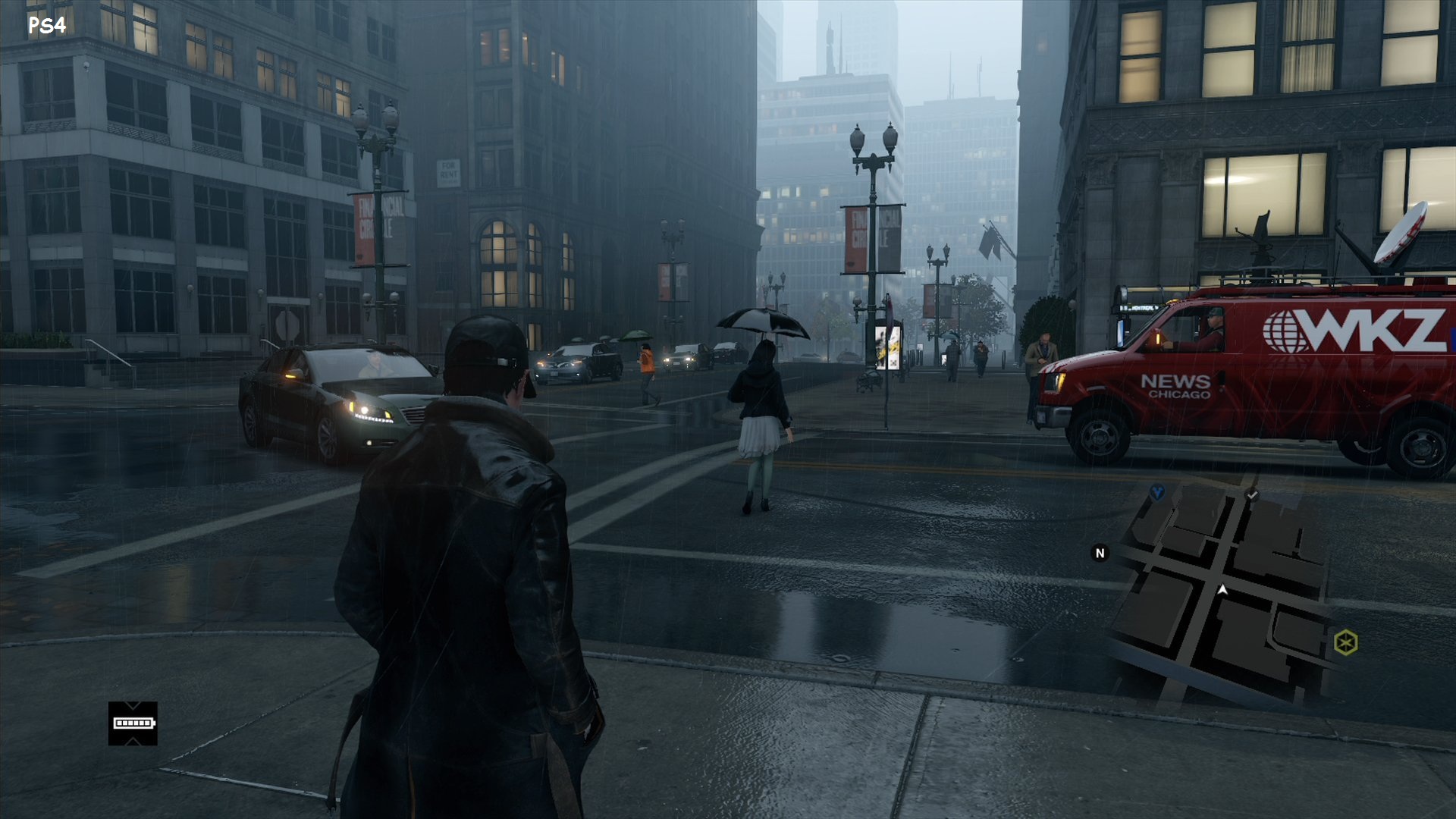
    For example, I’m currently replaying the original WatchDogs, a game I’ve completed several times before. Here, you’re billed as The Vigilante, but the game lets you steal from common folk, shoot and run them over, assassinate people who are supposed to be bad, and otherwise wreak havoc on a simulated version of Chicago.

    Do I cringe as I kill and steal in a game like WatchDogs? I do. And I always have.

    But since I know what I’m doing has nothing to do with reality, and I’m not preparing myself to go out and kill in the real world, these feelings I feel as I kill virtual beings just serve to remind me that, yes, I am human, and yes, life is precious.

    That’s what we need to remember with whatever sort of entertainment we rely on.

    When we read, watch TV, play games, chat with AI, surf the Internet, etc., and what we’re experiencing makes us feel uneasy, and we wonder if maybe it’s reinforcing the worst in us, we are human, we value life, and we make a decision every day to preserve it.

  • Torment: Tides of Numenara

    Torment: Tides of Numenara

    If you are new to Torment: Tides of Numenera, the combat system might surprise you. While it eventually becomes manageable as you master cyphers and esoteries, it represents a departure from more traditional, action-oriented RPGs. 

    Combat Against The First

    Combat is framed around distinct, narrative-driven “Crises” where environmental interactions, stealth, and dialogue often take precedence over standard hack-and-slash fighting. It can feel clunky compared to other turn-based RPGs because characters move and attack slowly, actions lack physical punch, and the mechanics force players to constantly micro-manage three distinct stat pools just to boost hit percentages. 

    One of the Many Machines Created by The Changing God

    When you first start the game, you’re exposed to systems that seem unusual, especially when weighed against Dungeons and Dragons or other RPGs. The terminology and the whole world is alien. But it’s a consistent universe, one that is unflinching in its detail and story. 

    And then there’s the fact that it’s a fantastic game. It’s a game of immense choice, sprawling dialogue, and a vast array of science-fiction tropes.

    A Maw in the The Bloom

    Torment: Tides of Numenera explores advanced science-fiction tropes ranging from transhumanism, sentient artificial intelligence, and dimensional travel to biomechanical engineering and ancient cosmic phenomena. It centers on the concept of immortality achieved through synthetic body-hopping, investigating the psychological fallout of leaving behind a trail of abandoned, sentient clones. 

    An Encounter with The Sorrow in a Mere

    And it’s almost purely text-based. There is very little spoken dialogue, so prepare yourself to read from beginning to end. Fortunately, it’s exceptionally well written. You may not always understand it, but your mind and heart will be titillated the entire time.

    Torment: Tides of Numenera released in 2017 on Windows, Xbox One, PS4, Mac, and Linux. It has a 81 Metacritic score and a Mostly Positive user rating of 71% on Steam. And while it has similar mechanics to something like Disco Elysium, its developers, InXile Entertainment, created it as the spiritual successor to Planescape: Torment.

    Conversing with The Sorrow

    It definitely has a similar vibe and mechanics to both of those games, and while it’s vastly different in many ways, if you’re a fan of text-heavy games that payoff with choice and consequence, it’s a must-play RPG.