Category: Cursor

  • The Architect of My Own Reality

    The Architect of My Own Reality

    I’ve spent the day vibe coding an app that has allowed me to create something that mirrors my unbridled enthusiasm and creativity. I know that sounds stupid, but I realized there’s no one around to tell me this isn’t possible.

    And since I’ve yet to reach my $20 a month limit in Cursor, and the app works as I’ve designed it to work, I’m happy. So, I decided to write about why vibe-coding is so much better than my day job. But instead of writing it myself, I let Gemini 3.1 Flash Lite do it for me, based on my prompt, of course.

    I also edited it a bit:

    In my day job, I am a professional software tester. My life is defined by the friction of the “No.”

    I spend my hours documenting elegant solutions, identifying critical edge cases, and proposing features that would make the user experience seamless. I send these tickets off into the void, only to have them return with a status update that feels like a cold splash of water:

    Won’t Fix. Out of Scope. Resource Constrained.

    In the real world, software is a compromise. It’s a series of negotiations between what is ideal and what is budget friendly. I am the person who sees the potential, but I’m not the person who holds the purse strings.

    Then, I close my work laptop and open my personal terminal. I start to “vibe code.”

    The Infinite Canvas

    When I vibe code, the dynamic shifts entirely. The hierarchy of the corporate office dissolves. There is no product manager to tell me that my vision is “not on the roadmap.” There is no lead developer to sigh and tell me that the architecture won’t support the change.

    When I am vibe coding, I am the business analyst, the coder, and the user all at once.

    If I decide that a button should glow when hovered, it glows. If I decide that the data should flow through a custom-built pipeline that defies standard conventions, I build it. And if I hit a wall—if the laws of physics or the limitations of a specific library make a feature technically impossible, I deal with it.

    The Absence of “No”

    The beauty of vibe coding isn’t that everything is easy; it’s that the intent is never rejected.

    When I encounter a limitation, the programmer, the version of myself that exists in the flow state, never says “No.” Instead, the conversation becomes a creative pivot.

    • The Real World: “We can’t implement that feature because the legacy database doesn’t support real-time updates.” (The conversation ends.)
    • Vibe Coding: “The database doesn’t support real-time updates? Okay, let’s build a middleware cache or switch to a different engine. Let’s find a way to make it happen.” (The conversation evolves.)

    In this space, a limitation is not a dead end; it is simply a prompt for a different path. I am never told that my idea is invalid. I am never told that my curiosity is a waste of time. I am never told that the project is “good enough” as it is.

    The Joy of Unrestricted Creation

    There is a profound, almost meditative joy in this autonomy. Vibe coding allows me to reclaim the agency I lose during the nine-to-five. It turns the act of programming from a chore of compliance into an act of pure expression.

    When I am vibe coding, I am not just testing the work of others; I am manifesting my own. I am learning that while the world may have its constraints, my imagination does not. And as long as I am the one at the keyboard, the answer to “Can we do this?” will always be the same:

    Let’s see how we can make it work.

  • Getting The Sims 3 to Work on a Modern Gaming PC

    Getting The Sims 3 to Work on a Modern Gaming PC

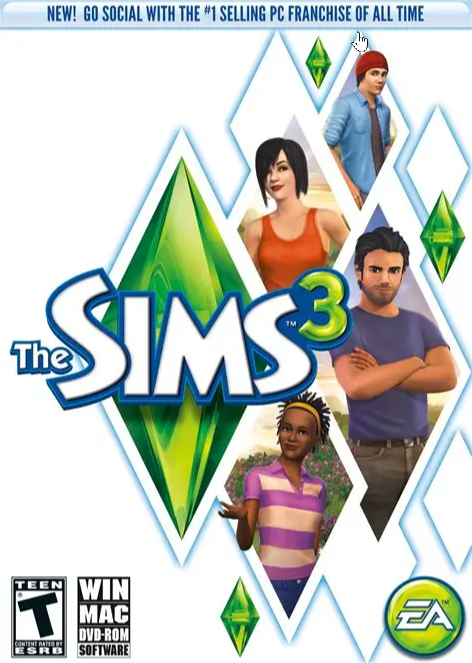
    EA’s The Sims 3 dates back to 2009. At that time, a typical gaming PC had an Intel Core 2 Duo or Core 2 Quad CPU, or an AMD Phenom II X4. The GeForce GTX 260 and GTX 275 were hot GPUs, as well as the AMD Radeon HD 4850 and HD 4870. Most computers had 2 to 4GB RAM, and video cards had 512MG to 1GB RAM. Mechanical hard drives were all the rage.

    Today, those specs have been completely oblierated by even the cheapest modern gaming PC. And while EA has given The Sims 3 a few updates over the years, the game still can’t handle the CPUs, GPUs, or the available memory of current PCs. Gamers have had to rely on community modders and hackers to trick the game into believing it’s running on old PC hardware.

    Recently I spent a day and a half scouring the Internet with the help of Gemini, trying to get The Sims 3 working on my daughter’s PC, to no avail. I tried all the mods, all the hacks, but nothing worked. Later, she had some success by going through a ritual of uninstalling and reinstalling the game, and rebooting her PC. Sometimes she would have to do this for hours until she got it working.

    Enter Cursor.

    I gave it all the info I could find about how to get the game working, plus it performed online searches, and it created a patcher utility that it claimed would allow the game to run. But every time my daughter would patch the game, it wouldn’t work. In the end, I installed Cursor, Git, and GitHub CLI on my daughter’s PC, cloned the code, and worked with Cursor to investigate the issue.

    Cursor scoured the game’s installation folder, examined her saved games, and made fixes. I would test those fixes, provide feedback, and it made more changes. Finally, after a couple of hours of me inputting requirements then testing, the game started running reliably. Further testing, where I shut her PC down, powered it on again, and launched the game, proved it worked. Then I completely uninstalled and reinstalled The Sims 3, patched it, and tried the game.

    It worked.

    Now she can consistently run the game every day, and it works.

    If you’d like to try the patcher, you can install it from my GitHub repository.

    The Sims 3 Patcher Tool

    Please let me or the various Sims communities know if it helps you run the game reliably.

  • Cursor Continues to Save My Life

    Cursor Continues to Save My Life

    I’m a middle-aged man who has worked in the software development industry for 35 years and has been computing for 45. I’ve learned a lot, but I’ve also forgotten a lot. I can honestly say that something I work on one day, week, or month, is forgotten the next.

    That’s where Cursor comes in.

    Not only can it review, edit, and write code for me, but it can also search through my documents and find information I often forget. Case in point, I was revisiting some UI automation I had worked on in June, and although it had only been about six weeks, I had completely forgotten the name of a SQL script I had written to reset data.

    I knew I had written it, but wasn’t sure if I had completed it, if it worked, where it resided, or anything else about it, so I asked Cursor:

    “I created a sql script earlier this year to reset the document designer changes in the associated databases. look for references to that work”

    It found it!

    I opened it in Notepad++ and didn’t recognize it, and it was clear it had been generated by AI (most likely by Gemini). It took me a few minutes to prove it was the correct one, but when I found a copy of it in a virtual machine, it looked promising.

    I asked Cursor a follow-up question:

    “If I remember correctly, what the script DeleteDocumentLayouts (latest) does is wipe out all the documents and then you have to reimport them. Are there notes specifically mentioning that?”

    And it confirmed exactly that. Now I was sure this was THE script I had used successfully in June.

    This isn’t an isolated incident. There are numerous occasions I’ve relied on Cursor to search documents, to confirm that a branch has been merged into Github, and more. It’s not just a coding tool; it is a universal AI tool especially focused on activities having to do with the file system or code.

    When I get a chance I’ll write about how I used Cursor at home to vibe code a patching tool for The Sims 3. Initially it didn’t work quite right, so I installed Cursor on my daughter’s computer, and it helped troubleshoot and update the patcher and got The Sims 3 working. This is a notoriously difficult old video game that Electronic Arts has failed to patch for modern systems, but Cursor figured it out.