Category: Good

  • AI Can Be Useful

    AI Can Be Useful

    Artificial intelligence is a much hated technology and for good reason. Like all the advances before it, it’s being leveraged by big tech as the be-all, end-all solution for all the world’s problems. It can lower costs, drive revenue, prevent fraud, and do it all cheaply. 

    Or so we’re led to believe.

    To be honest, though, AI isn’t bad. It’s the people who use it poorly and worsen our lives with it, they are the problem.Fortunately, we too can use it, and we can use it wisely.

    There are hundreds of uses for AI, but here are a few I find it particularly good at.

    Building Software

    Proficient coders will tell you AI is a superpower, but only if you know what you’re doing. I agree that’s the case when creating production software, but I create software for myself. 

    In my case, I vibe-code the entire project, and I never look at the source code. I ask Cursor Agents, my IDE of choice, to write the code and tests, investigate issues, etc., and I serve as the business analyst and software tester. 

    It does the rest.

    I also create and configure the GitHub repo, but Cursor Agents handles creating branches, committing the code, and pushing it. 

    And it does an excellent job. None of my projects are huge, and all the coding is done with either the Auto model or using Grok 4.5 High, but it very inexpensively serves the role as code creator and maintainer. 

    Recommending

    I recently chatted with Gemini about books. I told it the kinds of books I like to read, giving it several examples of ones I have enjoyed, as well as some basic information about what I like and dislike. I then uploaded a list of all the Kindle books I hope to one day buy, and asked Gemini to review the list.

    It pointed out how many of them didn’t meet the criteria I had outlined, because they were too technical, or written poorly, or there was some other issue with them. And it recommended several other books. I let it know which I’d already read and liked, added a few it suggested to my list, and now I have a pinned conversation in Gemini I can use anytime I need a book recommendation.

    This is an activity that AI is custom-made for. You could, for example, give it a list of TV shows or movies or video games that you like, and several you don’t, and ask for suggestions. And if you’re already familiar with ones it suggests, go back and forth with it until it understands your preferences and suddenly you have a valuable recommendation machine.

    Sorting Thoughts

    There are days when I feel upset, or have questions on my mind, or maybe I’m just wondering how something in the world works. In these cases I often turn to AI. I tell it what I’m thinking, what my problem is, or what my question is. We chat, exchanging comments, suggestions, and questions until I’m satisfied.

    This is another one of those situations AI is good at. No, it can’t solve all my problems, but it’s excellent as a sounding board, and it has a vast array of knowledge. I do this often, most of the time using the interactive feature in Gemini, where it’s always on, listening for my input, then it responds.

    We chat until I’m satisfied.

    Teaching Me

    I always have lots of questions. 

    I’m constantly wondering about technology, products, gardening, and more. I often turn to AI in these situations, providing it with pictures or other information. It almost always provides solid answers that help me understand the world we live in.

    I’ve gone from knowing almost nothing about how to set up a repo in GitHub properly to actually understanding the difference between CodeQL and Dependabots. I now understand better how to care for the plants in my yard. I have a better understanding about how smart phones, versus bridge cameras or full-frame cameras, work.

    AI encompasses the world’s knowledge, and if you are careful enough, and aren’t too naive, it can help you understand it.

    Reminding Me

    I couldn’t survive without the reminders I keep on my Android phone, or the calendar events I have for appointments. They keep me from forgetting all of the various things I need to do.

    But sometimes I just need a quick way to remember something. With Gemini, I can tell it things, and later, ask it to remind me about a fact I committed to it. I can do the same with notes in Google Keep, or in Google Drive, and Gemini can find those too. 

    It’s a persistent memory store that I can turn to at any point on my phone or computer and retrieve information I would otherwise lose to my aging mind.

    Assisting with Video Games

    Video games are an important aspect of my life, and have been for over 40 years. But my middle-aged brain, eyes, and hands don’t work like they used to. 

    Enter AI.

    Not only can I ask for game recommendations, but it also helps with understanding how accessible and/or difficult a game is, how long a game is, where I’m currently at in the game, and occasionally, it helps me get through a game. 

    In those cases though, my personal opinion is, if I need a walkthrough to complete a game, it’s not worth playing.

    Since chatbots like Gemini have access to all of the FAQs, reviews, opinion pieces, walkthroughs, and other information on video games, it’s the perfect place to answer all my questions.

    And So Much More

    This of course isn’t all AI can do. 

    I use it constantly, and while there are times it’s frustrating, where maybe I say, “Hey, Google,” to my smart watch or smartphone and it doesn’t respond, or I ask it a question and it returns something that doesn’t resemble an accurate response.

    But when it works, it’s like magic. It provides access to so much information, and does it so well so much of the time, it has become indispensable.
  • Video Game Violence Isn’t Violence

    Video Game Violence Isn’t Violence

    Just as I know that holding a conversation with AI isn’t the same as holding one with another human being, I know that killing virtual beings in a virtual universe isn’t the same as killing in the real world.

    When I started playing computer games in the early 1980s, graphics were primitive. Firing missiles and dropping bombs in the original F-15 Strike Eagle on the Commodore 64 required the suspension of disbelief because everything in the game, including the plane and the world, weren’t realistic looking.

    F-15 Strike Eagle

    It wasn’t long before programmers learned how to make computers like the C64 depict more realistic images. Then came along better hardware, such as the Atari ST and the Amiga. Now killing began to look like killing. Then PCs upped the ante by increasing the number of on-screen colors all the way up to 256, then to millions. This, along with the addition of more pixels and more powerful graphics cards, gave developers unbelievable power.

    By the early 1990s we had cringe-worthy video game violence. Games like Castle Wolfenstein, Mortal Combat, Doom, and more, showed gore that disgusted right-wing Christians and had moms asking for such games to be banned.

    Mortal Kombat

    Today there’s no question of whether violence is depicted with sufficient detail in modern video games. The hardware and software are more than capable, and it no longer requires you to imagine it. You only have to open your eyes to see.

    I’ll admit, I play a lot of violent games. And I’m not a big fan of little indie titles where farming, dating, or running a bookstore is the main focus. I prefer big, Triple-A RPGs, shooters, and similar where making progress involves killing bad guys.

    Castle Wolfenstein

    Sometimes they aren’t even bad guys.

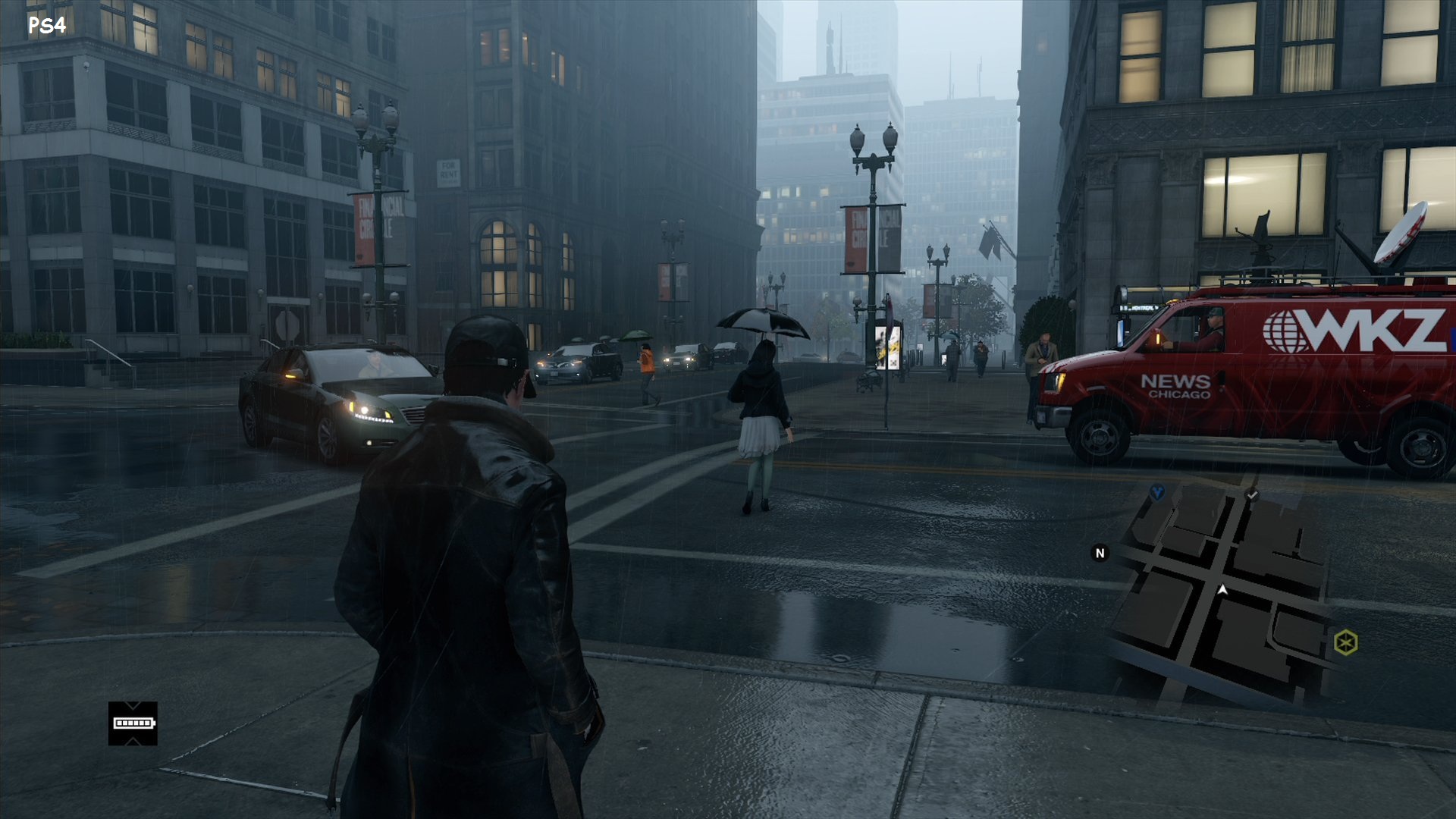
    For example, I’m currently replaying the original WatchDogs, a game I’ve completed several times before. Here, you’re billed as The Vigilante, but the game lets you steal from common folk, shoot and run them over, assassinate people who are supposed to be bad, and otherwise wreak havoc on a simulated version of Chicago.

    Do I cringe as I kill and steal in a game like WatchDogs? I do. And I always have.

    But since I know what I’m doing has nothing to do with reality, and I’m not preparing myself to go out and kill in the real world, these feelings I feel as I kill virtual beings just serve to remind me that, yes, I am human, and yes, life is precious.

    That’s what we need to remember with whatever sort of entertainment we rely on.

    When we read, watch TV, play games, chat with AI, surf the Internet, etc., and what we’re experiencing makes us feel uneasy, and we wonder if maybe it’s reinforcing the worst in us, we are human, we value life, and we make a decision every day to preserve it.

  • There’s Nothing We Can Do About The Tech Industry

    There’s Nothing We Can Do About The Tech Industry

    I’ve been accused of not having hope, and I’ll admit, it’s true. I’m glad there are people out in the world fighting for rights, attempting to keep us safe, and generally keeping governments and big corporations in check. I know these same people can make a difference, but I think it’s a losing battle. I think we need to look at things more realistically, especially in regards to tech.

    Big tech is in a constant struggle to make money for their shareholders. They demand infinite profit growth, usually at the expense of the workers. These companies ramp up, hire, invest, and then when things don’t go quite right, they downsize, leaving potentially thousands of workers out of jobs.

    As someone who has worked for tech companies for over 30 years, I know how this works. I know that feeling when layoffs are announced and you worry you’re next. I also know how it feels to get numb to the whole experience. So when a company like Microsoft is rumored to lay off thousands of workers across the entire organization, I genuinely feel for those people. I also realize this is inevitable.

    And while we feel for the workers, we also often have a vested interest. We become attached to products these companies make. Or, when a smaller company is acquired by a larger one, we worry the products will either change in unwelcome ways, or shutdown altogether.

    The reality is, we can’t change this in any significant way. The stock market fuels the growth of these companies, often makes the people running them rich, but requires a cutthroat approach to managing the products and workforce. Just because we’re attached to a given product, we can’t expect the company to treat it differently.

    It’s good to have compassion for others but we need to have a realistic outlook. We need to see big tech for what it is. It’s like a government constantly at war. Those workers who get burnt out, who maybe have lost their spouses after ignoring them for too long, and get laid off at the whim of the corporate overlords, are the casualties.

    They survive, but are forever changed.

  • The Most Annoying Thing About AI is How You Can’t Convince It of Anything

    The Most Annoying Thing About AI is How You Can’t Convince It of Anything

    There are certain individuals who are so self-centered, so self-involved, they assume they know what you are, who you are, what you think, and why you think it. You try to convince them otherwise, but you always fail.

    That’s a chatbot in a nutshell. You converse with it, wanting feedback similar to that of a reasonable human being, but it takes what you say at face value, and regardless of how much effort you put into correcting its view, it never changes.

    Why converse with a chatbot in the first place, you say? That’s a good question.

    There are some topics the human beings I know have no interest in, so, if I want to talk to someone about those things, I turn to Gemini. I’ve had many satisfying conversations with it, so it’s not like it’s completely unable to fill in for real humans.

    But it often falls short.

    I know when to cut off a conversation with Gemini. It asks me a question, and I know it doesn’t actually care about my response. I’m not so stupid I think there’s a sentient being on the other side of the screen.

    But sometimes, I just want it to understand what I’m saying. Really understand. Help me to understand myself. But it can’t bridge those gaps, look me in my eyes, see that I’m pleading with it to get me, and then make a leap of faith.

    It just can’t do it.

  • Morality Isn’t Real

    Morality Isn’t Real

    Humans invent structures that fashion the world in ways that try to make sense of it. That order it and align people’s thinking, so everyone is worshipping the same god, honoring the same values, and obeying the same laws.

    This is all manufactured. There’s nothing real in any of it, but we say it’s real so that we can convince others it is. So they’ll buy into. Embrace and make it their own.

    There’s nothing inherently wrong with this. We’ve been actively creating reality since man first set foot on Earth. It reflects our ability to imagine, and to see a world quite different than the one we live in.

    But just because we say or think that murder is wrong, or we shouldn’t steal, and even when we attribute these laws to a higher power, for many it makes no difference. Even the humans that assure us we better do right else we’ll go to jail, or maybe even to hell, these laws are arbitrary and often forgotten when passion takes over their senses.

    And while it may make sense to obey laws, each and every human decides what’s right and wrong. We filter through all we’ve learned and decide what to keep, and what to toss away.

    It’s free will at its finest, and there’s no way to escape it. It consumes us, tears at the fabric of our beings, taunts us to do something other than what the consensus asks us to do.