
Category: Art

  • AI Can Be Useful

    AI Can Be Useful

    Artificial intelligence is a much hated technology and for good reason. Like all the advances before it, it’s being leveraged by big tech as the be-all, end-all solution for all the world’s problems. It can lower costs, drive revenue, prevent fraud, and do it all cheaply. 

    Or so we’re led to believe.

    To be honest, though, AI isn’t bad. It’s the people who use it poorly and worsen our lives with it, they are the problem.Fortunately, we too can use it, and we can use it wisely.

    There are hundreds of uses for AI, but here are a few I find it particularly good at.

    Building Software

    Proficient coders will tell you AI is a superpower, but only if you know what you’re doing. I agree that’s the case when creating production software, but I create software for myself. 

    In my case, I vibe-code the entire project, and I never look at the source code. I ask Cursor Agents, my IDE of choice, to write the code and tests, investigate issues, etc., and I serve as the business analyst and software tester. 

    It does the rest.

    I also create and configure the GitHub repo, but Cursor Agents handles creating branches, committing the code, and pushing it. 

    And it does an excellent job. None of my projects are huge, and all the coding is done with either the Auto model or using Grok 4.5 High, but it very inexpensively serves the role as code creator and maintainer. 

    Recommending

    I recently chatted with Gemini about books. I told it the kinds of books I like to read, giving it several examples of ones I have enjoyed, as well as some basic information about what I like and dislike. I then uploaded a list of all the Kindle books I hope to one day buy, and asked Gemini to review the list.

    It pointed out how many of them didn’t meet the criteria I had outlined, because they were too technical, or written poorly, or there was some other issue with them. And it recommended several other books. I let it know which I’d already read and liked, added a few it suggested to my list, and now I have a pinned conversation in Gemini I can use anytime I need a book recommendation.

    This is an activity that AI is custom-made for. You could, for example, give it a list of TV shows or movies or video games that you like, and several you don’t, and ask for suggestions. And if you’re already familiar with ones it suggests, go back and forth with it until it understands your preferences and suddenly you have a valuable recommendation machine.

    Sorting Thoughts

    There are days when I feel upset, or have questions on my mind, or maybe I’m just wondering how something in the world works. In these cases I often turn to AI. I tell it what I’m thinking, what my problem is, or what my question is. We chat, exchanging comments, suggestions, and questions until I’m satisfied.

    This is another one of those situations AI is good at. No, it can’t solve all my problems, but it’s excellent as a sounding board, and it has a vast array of knowledge. I do this often, most of the time using the interactive feature in Gemini, where it’s always on, listening for my input, then it responds.

    We chat until I’m satisfied.

    Teaching Me

    I always have lots of questions. 

    I’m constantly wondering about technology, products, gardening, and more. I often turn to AI in these situations, providing it with pictures or other information. It almost always provides solid answers that help me understand the world we live in.

    I’ve gone from knowing almost nothing about how to set up a repo in GitHub properly to actually understanding the difference between CodeQL and Dependabots. I now understand better how to care for the plants in my yard. I have a better understanding about how smart phones, versus bridge cameras or full-frame cameras, work.

    AI encompasses the world’s knowledge, and if you are careful enough, and aren’t too naive, it can help you understand it.

    Reminding Me

    I couldn’t survive without the reminders I keep on my Android phone, or the calendar events I have for appointments. They keep me from forgetting all of the various things I need to do.

    But sometimes I just need a quick way to remember something. With Gemini, I can tell it things, and later, ask it to remind me about a fact I committed to it. I can do the same with notes in Google Keep, or in Google Drive, and Gemini can find those too. 

    It’s a persistent memory store that I can turn to at any point on my phone or computer and retrieve information I would otherwise lose to my aging mind.

    Assisting with Video Games

    Video games are an important aspect of my life, and have been for over 40 years. But my middle-aged brain, eyes, and hands don’t work like they used to. 

    Enter AI.

    Not only can I ask for game recommendations, but it also helps with understanding how accessible and/or difficult a game is, how long a game is, where I’m currently at in the game, and occasionally, it helps me get through a game. 

    In those cases though, my personal opinion is, if I need a walkthrough to complete a game, it’s not worth playing.

    Since chatbots like Gemini have access to all of the FAQs, reviews, opinion pieces, walkthroughs, and other information on video games, it’s the perfect place to answer all my questions.

    And So Much More

    This of course isn’t all AI can do. 

    I use it constantly, and while there are times it’s frustrating, where maybe I say, “Hey, Google,” to my smart watch or smartphone and it doesn’t respond, or I ask it a question and it returns something that doesn’t resemble an accurate response.

    But when it works, it’s like magic. It provides access to so much information, and does it so well so much of the time, it has become indispensable.
  • Video Game Violence Isn’t Violence

    Video Game Violence Isn’t Violence

    Just as I know that holding a conversation with AI isn’t the same as holding one with another human being, I know that killing virtual beings in a virtual universe isn’t the same as killing in the real world.

    When I started playing computer games in the early 1980s, graphics were primitive. Firing missiles and dropping bombs in the original F-15 Strike Eagle on the Commodore 64 required the suspension of disbelief because everything in the game, including the plane and the world, weren’t realistic looking.

    F-15 Strike Eagle

    It wasn’t long before programmers learned how to make computers like the C64 depict more realistic images. Then came along better hardware, such as the Atari ST and the Amiga. Now killing began to look like killing. Then PCs upped the ante by increasing the number of on-screen colors all the way up to 256, then to millions. This, along with the addition of more pixels and more powerful graphics cards, gave developers unbelievable power.

    By the early 1990s we had cringe-worthy video game violence. Games like Castle Wolfenstein, Mortal Combat, Doom, and more, showed gore that disgusted right-wing Christians and had moms asking for such games to be banned.

    Mortal Kombat

    Today there’s no question of whether violence is depicted with sufficient detail in modern video games. The hardware and software are more than capable, and it no longer requires you to imagine it. You only have to open your eyes to see.

    I’ll admit, I play a lot of violent games. And I’m not a big fan of little indie titles where farming, dating, or running a bookstore is the main focus. I prefer big, Triple-A RPGs, shooters, and similar where making progress involves killing bad guys.

    Castle Wolfenstein

    Sometimes they aren’t even bad guys.

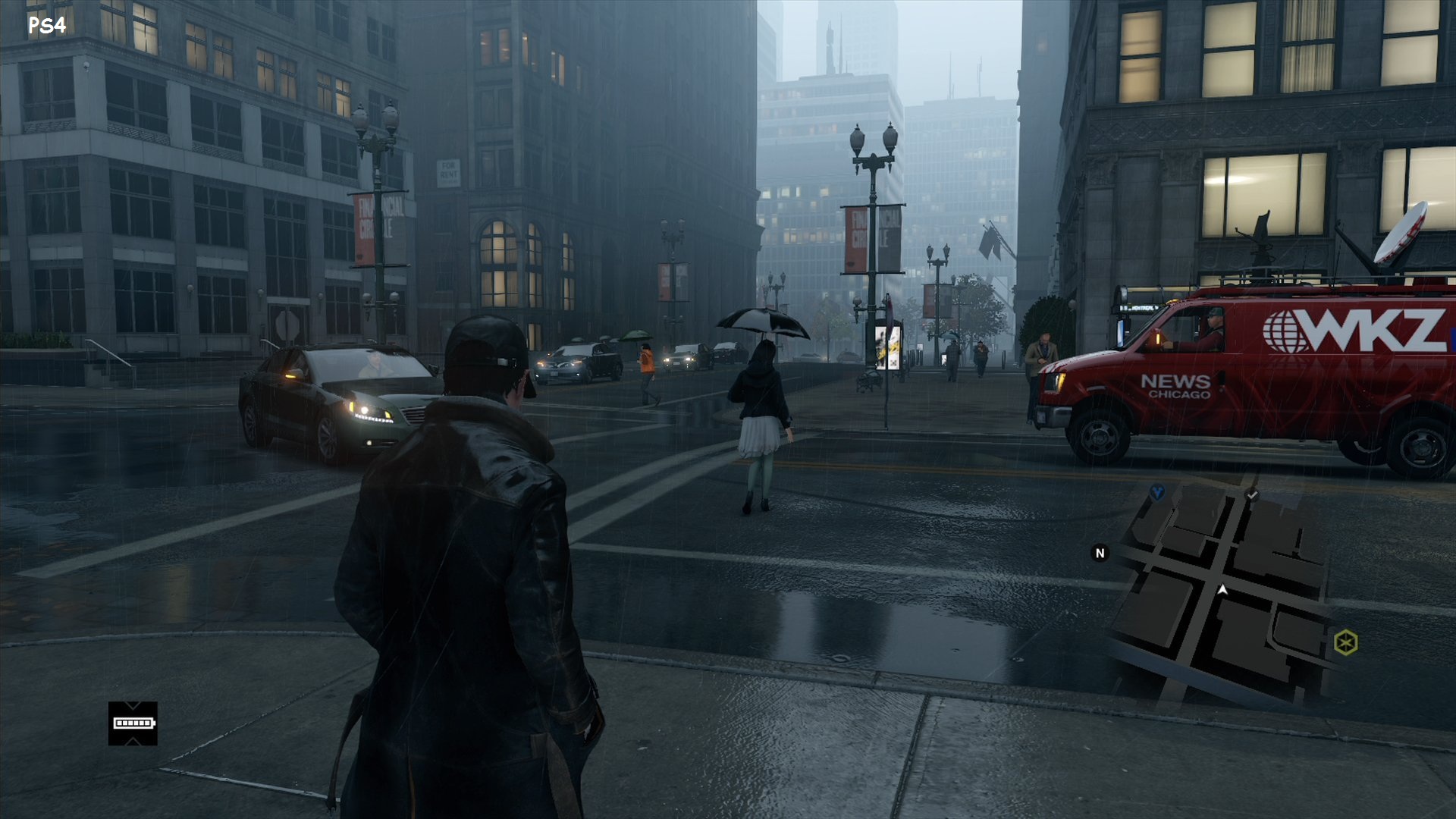
    For example, I’m currently replaying the original WatchDogs, a game I’ve completed several times before. Here, you’re billed as The Vigilante, but the game lets you steal from common folk, shoot and run them over, assassinate people who are supposed to be bad, and otherwise wreak havoc on a simulated version of Chicago.

    Do I cringe as I kill and steal in a game like WatchDogs? I do. And I always have.

    But since I know what I’m doing has nothing to do with reality, and I’m not preparing myself to go out and kill in the real world, these feelings I feel as I kill virtual beings just serve to remind me that, yes, I am human, and yes, life is precious.

    That’s what we need to remember with whatever sort of entertainment we rely on.

    When we read, watch TV, play games, chat with AI, surf the Internet, etc., and what we’re experiencing makes us feel uneasy, and we wonder if maybe it’s reinforcing the worst in us, we are human, we value life, and we make a decision every day to preserve it.

  • The Long Road Back to Amiga: A MiSTer FPGA Post-Mortem

    The Long Road Back to Amiga: A MiSTer FPGA Post-Mortem

    Return to the Amiga

    I am a huge Commodore fan and have been since the very early 1980s. I bought an Amiga 1000 the fall of 1985, and an Amiga 500 a few years later. The Amiga was my sole personal computer until around 1983, and I played hundreds of amazing games on it in the 8 years I owned it.

    When I bought a MiSTer FPGA a month or two ago, it was mostly so I could play many of those old Amiga games again. Little did I know the amount of work it would take to get the games onto the MiSTer.  This post mortem details at least some of the steps I took to fruitlessly try to get Amiga games working as .hdf files on the MiSTer FPGA. 

    AI as the Sole Source of Truth

    I have relied on AI, Gemini in this case, every step away. Interestingly, it has proven to be a double-edged sword. It’s been invaluable in some respects, and downright stupid in others. It’s often provided incorrect information, or led me down pathways that didn’t work. It was also sometimes unwilling to provide any information, which forced me to coax it out of it. 

    I admit I rely heavily on Gemini for most things nowadays, and I relied on it here, to my detriment. Had I been more knowledgeable about these matters, I might have had a better outcome.

     The Journey

    • Amiga Vision – I read that Amiga Vision provided an all-in-one solution with hundreds of games. I just had to download and copy some folders to my SD-CARD. I either downloaded the wrong version (I don’t think that was the case) or it somehow didn’t copy over correctly because it didn’t work. I got errors on the MiSTer FPGA when I tried to use it.
    • Conversion – I downloaded .lha files from WHDLoad and was directed by Gemini to use a Bash script to convert them to .hdf files.This didn’t work even though I was using Git Bash, AmiTools, and some GnuWin32 utilities. In the end I had Cursor fix the script to get it working..
    • Bash –  A critical failure occurred where the script logic, likely due to improper variable handling or file path iteration, effectively mapped the same game file into every generated .hdf file, resulting in a batch of corrupted or redundant images. This was resolved, or at least partially so, by adding a line to the Bash script to delete the tmp folder before copying new game files.
    • Amiga Forever – Attempting to create a boot hard drive (DH0) in Amiga Forever failed because that environment is unable to create SCSI hard drives that are compatible. In the end, I could create the initial .hdf file in Amiga Forever, then had to copy it to the SD-CARD, and boot it in MiSTer FPGA, and from there, set the drive information, partition it, format it, and install Workbench 3.1.
    • WHDLoad – Once I got my Workbench 3.1 hard drive working, I attempted to mount a game .hdf file, but found it was missing WHDLoad. Gemini directed me to use a PowerShell script it created to inject WHDLoad into the .hdf files.
    • WHDLoad Continued – I abandoned the automated batch approach in favor of manually injecting files into a master .hdf. This required using the Amiga shell to manually handle the installation of the WHDLoad package. This was difficult because I had to copy the WHDLoad files to the boot drive, and install it. In the end, I created a floppy disk in Amiga Forever, copied the necessary files to it, then copied that to the SD-CARD, and was able to copy it to the hard drive and install it.
    • Mismatched Files – A recurring issue involved the game .slave file on the .hdf. When the .lha was initially unpacked, the internal naming conventions in the .hdf file didn’t match the expected launch parameters, forcing me to manually rename the slave files within the Amiga environment. Potentially, this would have to be done for every .hdf game file, or maybe the Bash script could be altered to do it for me, which would require converting all of the .lha files again.
    • Amiga Vision Again – Finally, after many false starts, Gemini directed me to again install the AmigaVision structure to source the necessary Kickstart ROMs and .RTB files manually, validating them against the requirements of the specific Workbench 3.1 setup.
    • It Works! –  Bewilderingly, when I mounted Amiga Vision in the MiSTer FPGA, it worked, providing a list of hundreds of games I could play. I tried running a couple, and they just worked!

    Final Thoughts

    This whole experience has been illuminating and frustrating, and I’ve felt helpless while Gemini continued to pump out information that I wasn’t knowledgeable enough to refute. I often got upset with Gemini, raised my voice at it, letting it know how displeased I was with it. This of course made no difference to it.

    I have working games via Amiga Vision and my old floppy images, and I’m happy about that. I’ve also spent more time using AmigaDOS and WorkBench in the last several days than I have in 35 years, which has been fun and interesting. It’s also a bit bewildering to see how antiquated yet perfectly functional this old operating system is.

    The worst part is how much time this has taken. I was fortunate to have a few days off work and spent most of several days doing nothing but this. Of course, I could have spent the time playing games, but this is all new to me, since I have never had a MiSTer FPGA before. Also, I’ve been buying new versions of Amiga Forever for probably 20+ years, but I’ve never spent that much time using it.

    My recommendation if you decide to buy a MiSTer FPGA or similar just to play Amiga games is go with Amiga Vision and hopefully it works for you. Playing games from floppy images works fine, but it’s nice to have a unified launcher and a list of hundreds of games to play.

  • Chicago (the band)

    Chicago (the band)

    Back in the 1970s, I never really thought about Chicago. I knew about them because we had a great FM radio station in Albuquerque that played all kinds of wonderful music, and the band definitely came on the air. My brother used to practice drums to them, and I had friends into them, but I didn’t pay much attention.

    Recently, I stumbled onto them on YouTube, and they blew me away! Songs I had heard hundreds of times before, like 25 or 6 to 4, suddenly sounded different. I could sense that they were more than just a rock band, or a rock band with horns. They were progressive rock, jazz rock, rock’n’roll!

    I bought this boxed set, The Studio Albums 1969-1978, which was very inexpensive on Amazon. I haven’t made it all the way through it, and I don’t like everything, but it has some amazing tracks. Like Ballet for a Girl in Buchannon from Chicago II, which includes Color My World and Make Me Smile, and is an amazing suite of songs.

    Bottom line is I underestimated Chicago. I thought of them as pop, or just rock, and didn’t realize the depth of their music, or their expressiveness, or the fact that the horns in the band really make them so much more progressive than so many other bands. It adds drama and highlights their ability to go beyond simple rock’n’roll.

  • Art is Dead

    Art is Dead

    The idea that art is dead because of artificial intelligence is ludicrous. That somehow technology could prevent human beings from creating? Even if AI could somehow consume all the art ever created and make it its own, erase the names and faces of all the humans who contributed, it doesn’t mean we’d give up and let it win.

    The thing that always surprises me is how humans love to fight. How we love to oppose everything, whether it’s good, bad, or somewhere in between. There’s always someone unwilling to concede that, say, taxes are a necessary evil, or that social welfare has some net positive effect on society.

    These same defiant humans are the ones who refuse to give in to AI. Who call it slop and have nothing to do with it. Some oppose it out of well-reasoned logic; others oppose it just to do so. In the end, AI has its detractors and its proponents, and neither will stop it from having an effect on our world, both good and bad. Even so, AI won’t keep us from creating art. Even when we fail at it and are unable to impress others with it, we can’t stop. 

    Like eating, breathing, and sleeping, art a necessary function. As long as humans live, so does art.